











In a world where technology is developing at a rate never seen before, our methods for powering our gadgets are also changing. With its efficiency and ease, wireless charging has become a game-changer.
The days of tangled cables are clearly coming to an end as wireless charging technologies continue to advance. The efficiency and simplicity of wireless charging are changing the way we charge our gadgets, from smartphones to electric cars. As technology advances and expands the realm of wireless power, be sure to follow along.
This blog examines how wireless charging technology is changing our daily lives by providing an in-depth analysis of the newest developments, trends, and solutions in the field.
Qi Standard: The Foundation of Wireless Charging
Qi is like the golden rule for wireless charging. It’s a global system that makes sure all gadgets can charge wirelessly. If a smartphone or a wearable supports Qi, they can charge without any wires. Understanding Qi is important. Why? Because it makes wireless charging possible everywhere.
Developed by the Wireless Power Consortium, Qi (pronounced “chee”) allows many different devices, like phones, smart devices, and even kitchen gadgets, to work together. The best part? There’s no need for wires or plugs!
Devices that use Qi have a special set of coils. These coils send and receive power without the need for wires. This is done through electromagnetic induction. Basically, a magnetic field forms between the charging pad (which sends power) and the actual device (which gets power). This balance of magnetic fields allows power to move easily. It charges devices that are simply placed on a surface that supports Qi.
Inductive vs. Resonant Wireless Charging
There are two main types of wireless charging – inductive and resonant. Each carries different perks and elements to consider.
Resonant charging offers more scope and freedom unlike inductive charging. But, inductive charging is used more often, because it works really well. To learn how wireless charging works, we need to understand these types. This helps to see their strengths and weaknesses and shapes the design of wireless charging solutions.
The Inductive Method:
This technique is more prevalent. It uses two coils: one in the charger (or sender) and one in the device being charged (or receiver). When these coils come near each other, an electromagnetic field springs up. This field makes a current in the receiver’s coil. This current charges up the device.
Advantages:
- Efficiency: Inductive charging is recognized for being both consistent and pretty speedy.
- Common Use: Lots of wireless chargers that follow the Qi standard use inductive methods. Hence, it’s a widely used approach for phones and other tools.
Considerations:
- Proximity Requirement: The gadget must sit right atop the power pad to effectively fuel up.
- Limited Spatial Freedom: The charging distance is relatively short, requiring precise alignment between the transmitter and receiver coils.
Resonant Wireless Power:
Resonant charging switches things up, needing coil resonance to transfer energy. That means you gain space, letting you power up even if the device is a bit skewed.
Advantages:
- Spatial Freedom: You have room to move with resonant charging when setting your device on the power surface.
- Multi-device Power Up: Often a single resonant power pad can charge several tools at once.
Considerations:
- Less Efficient: Resonant charging might not be as efficient as inductive charging.
- Complexity: Implementing resonant charging technology can be more complex and expensive.
Inductive charging is popular due to its efficiency and common use. But resonant charging is turning heads thanks to its flexibility and adaptability. The best one? That depends on your needs, what you value most, and the trade-off between efficiency and convenience.
Fast Wireless Charging: Speeding Up the Process
The development of fast wireless charging methods has been driven by our fast-paced lifestyles and their desire for speed. The pursuit of expedited wireless charging via technological breakthroughs in batteries and optimal charging algorithms is a crucial facet of the wireless power environment.
Fast wireless charging is now a key feature of updated charging tech. It provides a speedy, effective solution to power up our gadgets in our always-on-the-move lifestyle.
- How Fast Wireless Charging Works: Fast wireless charging uses higher power and smart charging methods to speed up the process. It boosts power fed to the gadget, making it soak up energy quicker.
- Progress in Battery Technology: Devices need to use advanced battery tech for speedy charging. Batteries like lithium-ion and lithium-polymer, with better charging acceptance and heat control, are vital for maintaining swift charging rates.
- Challenges and Solutions: Fast wireless charging, though beneficial, faces hurdles. One of them is heat build-up, which can affect the battery’s lifespan. Manufacturers solve these concerns by using smart heat control methods, along with complex charging systems. These adjust the power supply based on the device’s temperature and charging stage.
- Industry Standards: Fast charging needed a common rulebook over devices. Hence, industry standards such as Qualcomm Quick Charge for wireless charging came into play. They help devices and charging pads work together smoothly, regardless of their make.
- Consumer Benefits: Think about it, fast wireless charging could make life easier. Need a fast charge before you leave? Or need to power up your wireless earbuds again? The speed of this feature improves how we use devices.
And remember, technology is always changing! The race for quicker and better ways to charge gears up. It means even faster and handier wireless power is on the horizon.
Wireless Charging in Electric Vehicles: Driving the Future
The introduction of wireless charging in electric cars (EVs) is causing a revolution in the automobile industry. Wireless charging’s ease of use fits in perfectly with the idea of intelligent, self-driving electric vehicles.
Wireless charging is transforming how we fuel electric vehicles (EVs). It’s an easier and effective choice compared to usual charging methods. Imagine a charger buried in the ground or a parking spot. When an EV is parked over it, the vehicle’s charger fills up without any wires needed.
Here are the benefits of Wireless Charging for Electric Vehicles:
- Seamless Integration: Wireless chargers fit into roads and parking spots nicely. They merge into city settings without any noticeable charging stations.
- Convenience: EV drivers just have to park over a charger. There’s no need to fiddle with plugs, making the charging task effortless and friendly.
- Reduced Clutter: No charging cables mean less mess. It makes charging simple. This helps keep public places neat and tidy.
- Automated Charging: Certain wireless charging systems align themselves. They position perfectly for ultimate charging without needing drivers to help.
Challenges and Future Outlook:
- Efficiency and Standardization: High efficiency is a must. So is creating standard, agreed-upon rules. These are needed for wireless charging for electric vehicles to become common.
- Cost and Infrastructure: Getting started can be pricey. Plus, we need to develop more infrastructure. These are hard parts to deal with, but progress is being made to fix these issues.
As the automotive industry continues to embrace sustainable solutions, wireless charging in electric vehicles holds the promise of making EV ownership even more convenient and widespread in the future.
Wireless Charging Pads: Where form meets function
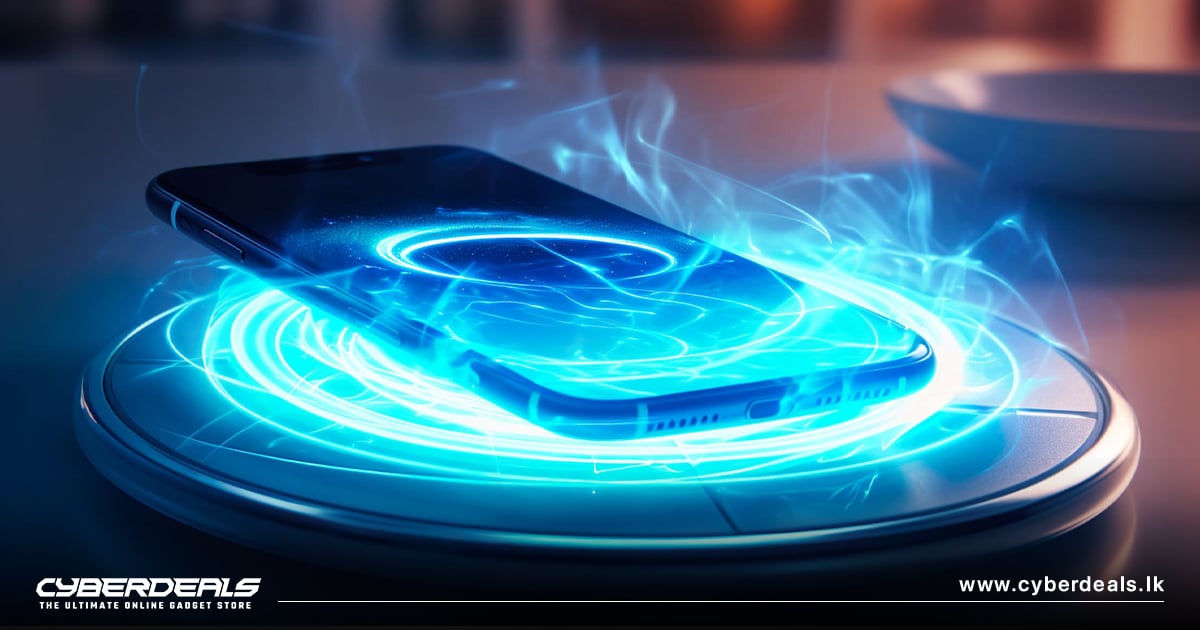
Wireless charging pads have become common and a convenient solution for powering a variety of devices. These pads employ inductive or resonant wireless charging technologies to transfer power from the pad to a compatible device without the need for physical connectors. Here’s a quick rundown:
- Functionality: Wireless charging pads have a charging area with coils. These generate an electromagnetic field. You just place your Qi-enabled device on the pad. This could be your phone or wireless earbuds. Your device’s coils line up with the pad’s coils. Now power can transfer and charge your device.
- Compatibility: Most charging pads without wires follow the Qi rule. That means they work well with a broad selection of devices. One pad can charge many devices! It’s universal and easy for the user.
- Design Integration: You can spot wireless charging pads everywhere. They’re in furniture, lamps, even cars. This makes charging handy and keeps spaces tidy and neat looking.
- Advancements: Wireless charging is getting better and faster. Power for your devices comes quicker. Plus, some pads can charge more than one device at once. This means less waiting and more doing.
- Considerations: Wireless charging pads are nifty. But, be smart. Think about how fast they charge, their look, and if they work with your gadgets.
In a nutshell, these pads are handy tools. They make charging easy-peasy and push us towards a lifestyle without a messy tangle of charging cords.
Check out CyberDeals.lk for a wide range of latest Wireless Charging Pads.
Eco-friendly aspects of wireless charging: Sustainability in action
With global environmental issues becoming more pressing, wireless charging’s environmentally beneficial features become more apparent. Wireless charging’s green features contribute to a sustainable method of energizing our technology, tackling environmental worries tied to classic charging techniques. Let’s examine how wireless charging lines up with green objectives:
- Reduced Electronic Waste: Wireless charging eliminates the need for disposable charging cables and connectors, reducing the generation of electronic waste. This change fosters a greener, more eco-friendly strategy by decreasing the environmental effect of tossed cables.
- Extended Device Lifespan: When you lose those physical connectors, device ports last longer. Why? Less wear and tear. The benefit? Your devices last longer. No constant replacements or upgrades. This not just saves money but is so much better for the planet too.
- The Power of Qi Standard and Interoperability: More people use the Qi standard for wireless charging now. Different devices and chargers can use it. The result? No need for special chargers and accessories. Everything gets simplified. Less production. Less waste. Better for everyone.
- Efficiency in Power Transfer: Wireless chargers are getting better. They use less energy, so you get more from your power source. This means less energy wasted, and that’s good for everyone and the Earth.
- Integration with Renewable Energy: We can now connect wireless charging networks with power from the sun and wind. This combo helps us use healthier energy, cuts dependence on finite resources, and shrinks carbon shoeprints for all charging activities.
- Eco-friendly Materials and Design: Manufacturers now use more green materials in making wireless chargers. They’re bothering to lessen the harm to nature from the materials for making charging pads to the box it comes in.
Wireless charging and the environment
By embracing these eco-friendly aspects, wireless charging contributes to a more environmentally conscious approach to powering our devices, aligning with the broader goals of sustainability and responsible consumption.
Check out CyberDeals.lk for more amazing electronic gadgets and accessories with unbeatable discounts and offers in Sri Lanka. For latest technology, tech news and reviews, stay tuned on our website as we bring in more cool tech updates through our blogs.